Leaderboard


Popular Content
Showing content with the highest reputation since 07/26/2026 in Posts
-
Crease for sure on my base caps. Far more difficult to crease my skull though.6 points
-
I'll ask the question: why in the wide world of sports was BU turning to look at first?5 points
-
In a real life NFHS experience..... On a Senior Night, one game before a championship game and it might have been little Johnny's friends iguinas's birthday too, I threw out a head coach for arguing over a FPSL play and an assitant coach for flying out of the dugout after the HC was tossed. The HC's argument was how could I make that call - well the kid slid through the 2B and hindered the play - and after blowing through the first warning, he got personal and wouldnt stop arguing, blowing through the other warning quickly. His personal statement included, what was I doing as it was Senior Night and the Championship game was a game away (here, an ejection includes a 3 game suspension). He appealed the suspension, of course, and got the three games reduced to one. All I care about was that he earned his in-game suspension, of course. But, to TMIB words, it is up to the coaches and players to act properly no matter what the future holds for them. They act like a fool, they risk participating in the next few games. We only care how they act in the current game. And dont let a coach sway you in a plate meeting by letting you know what is upcoming for them. Forget it as soon as you here that gibberish. It doesnt matter for the current game.5 points
-
"Ground rule" double. ... and 50 Chuck'E'Cheese tokens for a perfect Skee-Ball roll.5 points
-
This is going to be an interesting one to follow. Lacking any real information at this point, I'll direct my response to the comments I am seeing. "It's a championship game, you can't/shouldn't toss him! They're down 6-0, why do you care!" Please, please, please, umpire brethren, NEVER fall for this line of rationale. If he needs to go, he needs to go. What happens next (i.e., suspension) is not our problem and we owe no favors. I've heard umpires justify non-EJs with "Yeah, but their next game . . . " NO, NO, NO. You are not working the next game and you are not a part of their team, so why do you care? If you are working the next game, you will have to deal with the monster you created by allowing him to remain in the game.4 points
-
Im sure when the State org Heads and assignors are not 60+ and stop using the "back in my day" phrase like its a Biblical quote, creased hats, patent shoes, all black ONLY requirements, and (sorry @MadMax) NAVY shirts will all but disappear. Look at any younger (below 35) umpire out on a field. They are not creasing hats (unless pressured by those 55+ guys) and they certainly aint wearing patent leather shoes. Sh&*t, even softball is coming around on the pant color! I am at an age and a space in my career that I wear what is comfortable. Nike Golf shoes with the FORBIDDEN white logo on the bases, and whatever plate shoes I have in the car on game day. Just look at the 50th anniversary of Referee Magazine. The advertisements in that thing CATERED to the 55+ crowd, but articles were written about the "aging out of officials" and the "lack of officials". Im guessing the marketing departments at these places are the same Old Heads (for you Old guys, thats what the young generations calls you, and they most definitely mean it with all of the respect you think it carries) that run the state orgs.4 points
-
Tonight's Wilmington vs. Frederick game will feature a fill-in umpire who came up through our local Little League Junior Umpire program. He's still in college, but has been doing high school and wood bat summer league for a couple of years. Apparently one of the regular guys got hurt in a DH yesterday, and the development guy for MLB knew him and called him up to be a fill in. (I don't know if he knows him from the local high-level work, or the MLB camp I encouraged him to attend). Anyway, as a mentor of sorts (he surpassed me, very early on), I'm stoked as hell and sorry I can't swing up there.4 points
-
Based on all the glowing feedback on the UA FB page, I think the demographic that loves the patent leather monstrosities exclusively belong to states and groups that still mandate navy shirts and plate/base pay differential. I will die on this hil lol4 points
-
It allows them to work 2nd base the full 360 degrees... just like the plate. It is required even more so since the runners can't slide through the base and not be in jeopardy to be put out. 2nd base has some of the most dynamic play types because of the various angles at which throws can originate from.3 points
-
I was in the Navy for 20 years and never saw a single ball cap with a crease. I like to crease my umpire hats and it has nothing to do with my Navy service. Just think it looks sharp. And I don't shine any of my shoes. Maybe the soles on the plate shoes. I like white on my base shoes. I saw a comment on this site by somebody claiming that military personnel only like all black shoes. Not true. You do you.3 points
-
Added some notes in your text but as regards this: "I keep hearing umpires say , yes its live here, and we offense chooses. I have had umpires stop me from calling time and taking care of the situation saying "they get to choose". but I do not see there is any scenerio ... where there is a choice? please correct me if im wrong." There is an esoteric scenario regarding the doctoring the ball penalty where you can find the word "choice". Otherwise there is no choice in the OBR/NCAA balk rule. There are guys who dress as umpires who find it hard to understand what you understand correctly and revert to using "coach choice."3 points
-
Precisely! Among other brands, I do high school, and my Assignor has always told us that we "must go by the lines." Hogwash. Even Varsity High School fields are mismarked, especially batter's boxes, and we are not to be held hostage to them.3 points
-
Rule book (paraphrased) : if any part of the ball crosses over any part of the plate, it’s a strike. better for most of us (assuming the boxes are marked correctly): if any part of the ball crosses over any part of the batters box line, it’s a ball.3 points
-
Sir, the next time you come into the U.S., we're going to need you to bring MacIntosh toffee and Old Dutch All Dressed chips for everyone. Keep the ketchup chips though--they're a war crime.3 points
-
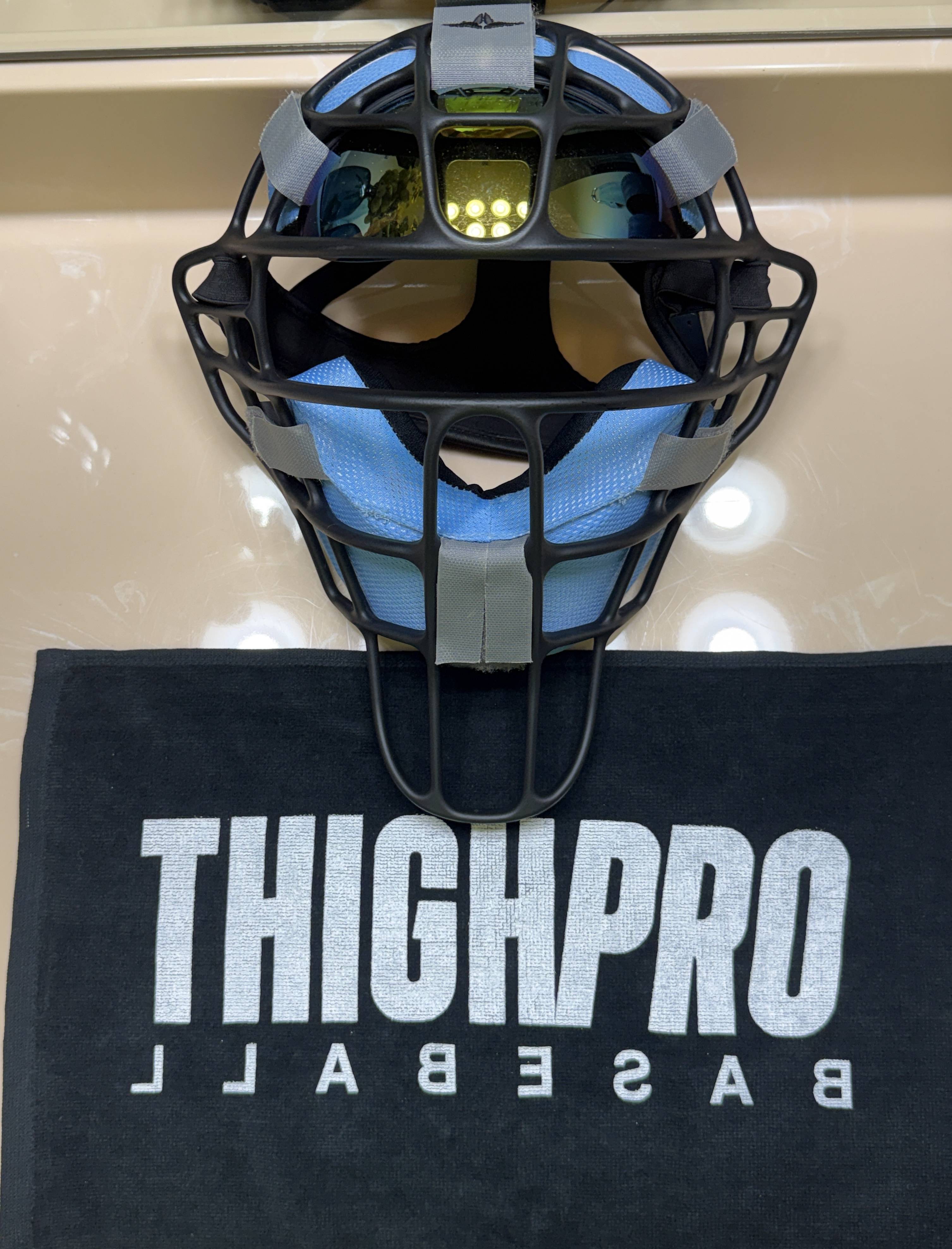
Davis Mirage with Custom All-Star FM4000 Pads. Shout out to @concertman1971 for doing me a solid on these impossible to find pads!
 2 points
 -
Absolutely. What did I see? I saw my partner make a call that was his to make.2 points
-
If you wanna get saucy….. Them: “Hey, c’mon, they haven’t called that all year!” Us: “Happy New Year.” Sent from my iPhone using Tapatalk2 points
-
Here's what I don't understand... Instead of conditioning "your" umpires to expand the strike zone off the plate, into-and-often-defined-by the batters' boxes ("call the chalk! call the river!" Whatever TF that means... ), why not change the width of the plate? A 46-60 or even a 50-70 field will never be used by any baseball player greater than 12 years old, and maybe-just-maybe youth softball could benefit from this, too. Umpires, at all levels, then could call the plate, instead of a widely / grossly interpreted zone. Pitchers could progressively be taught to pitch to the plate, and catchers could be taught to set up... oh I don't know... on (the edge of) the plate! Novel ideas! ------------------------------ Prefaces: - I am not perfect. - I do not have a published, recognized method that I am "selling" or defending. - I do not directly represent a union, organization, or doctrine. - I call a wide variety of levels, and have called every level of baseball short of "The Show". I no longer call (as PU) anything less than 60'6" pitching distance, unless emergency call-in or voluntary event. The terms "river", "white line", "chalk", "paint" are foreign to me. Sure, I was a catcher, I know what they mean, but as an umpire, they are not part of my lexicon (vocabulary). The width of the plate (the physical object – we can discuss in more detail if that includes the black rim or edging) is the width of the zone. Period. Simple. Easy. I view it as a binary conditional query – did the pitched ball pass over (a part of) the plate? - If No → Ball. - If Yes → Next Judge / Determine Height. Now, the plate itself has divisions, or zones, if you will. I teach developing and novice umpires this concept, by way of introducing or demonstrating one of these: Of course, there's the upper boundary ("top") and lower boundary ("bottom"), and I establish them as early and often or as necessary in a game. If you're a batter or catcher, you will hear me actively say, "That's the top" or "That's the bottom" (after calling the Strike, of course). Then, in regards to the width, I use the following terms for the 5 zones or divisions or segments of the plate: Inner Edge – Inner Third – "Center Mass"* – Outer Third – Outer Edge. * - Use what you want for this middle / center region. I despise the colloquial terms "c0cꓘ shot" or "down the d!cꓘ". Instead, I use the term "center mass", and granted, I don't (need to) use it often, if at all. I find myself using it as a point of levity, such as when a Batter takes the pitch during a steal attempt, and the Batter will ask after all is settled, "Where was that one?", to which I reply, "Center mass"... and the F2 chuckles and audibly smirks. Just like the establishment of the Top and Bottom boundaries, I actively identify the Edges. A pitch is grooved down that inner edge? "Hrike!... that's the Edge." "Any further in?" "Nope, that's the edge." A pitch catches the (outer) corner? "Hrike!... that's the Edge" "Catch the corner?" "Yup, the Edge". And both the Batter and the Catcher are equally appreciative. I consistently reiterate and reinforce – Edge, edge, edge. Define the boundaries. For both opponents. Where I use the "Thirds", is when a Batter asks "Was that the edge/corner?" or "Any further out/in?", to which I'll reply (something like) "No, outer/inner third." Being that that's not the edge, it implies that there's more to go... of course, up to the defined Edge. I never declare "third", but I use it as an answer to the question. I always answer questions... which is something that, again, players on both sides are appreciative of. Too often, college and pro Batters and Catchers alike remark that other College and pro umpires are too cryptic, too vague, and too standoffish, often ignoring even simple questions. Where I employ the zone training plate is with already-active umpires who are interested in challenging themselves. While I introduce the training plate to brand-new or novice umpires, I don't advise using it with them (putting them on it); instead, simply train and condition them to read and call the plate as a whole to start. Don't overwhelm them. With the interested veterans, I lay out the training plate as a challenge – to track the pitch to a color segment, and identify where it primarily crosses. This takes the emphasis from tracking the pitch to the catcher's mitt, and transposes it to the plate... where it should be... and where ABS-Hawkeye and TrackMan are largely focused. Granted, tracking a pitch through the zone to the mitt is a component of the pitch-tracking process, but how the catcher catches it – where it is, how or if he catches it (fingers up or down, ball dropped, etc.) often influences what we collectively judge the pitch to be, especially if it's "close".2 points
-
That becomes a problem when you learn 3-4 man. PU and U1, U2, U3 is intuitive. U1 at HP and U2 at 1B is not.2 points
-
Yes, I always want to get to the 45, OR AFATPA (As Far as The Play Allows). However, my keen baseball knowledge will tell me that a 2 hopper hit to f4 with no one on tells me to use economy of motion. Trail the runner, but understand that sprinting to the 45 adds nothing to the game. IMO, the guy who blindly sprints to spots is telling me that he is inexperienced. That same keen awareness also knows that a slow roller hit to f5 who is charging hard and throwing on the run often pulls f2 off the bag and towards the runner. this means I am not blindly running to a spot, but rather UMPIRING and taking what the play gives me, while reading the actions of the fielders. I may have to stay longer for fair/foul, there may be some action by f3 coming off the bag early as he reads an errant throw. Does BR slide at the last minute? Is there OBS? Plays on the infield are many times the plays where we get paid. Read the play, react to the play, make the call. Just my $0.022 points
-
I was screaming at the TV that night. Idiot announcers. The live broadcast wasn't clear in real time if the third out was appealed at first or third, so I asked my wife that during the commercial...and let her know, assuming the appeal was made at first, exactly what was going to happen after the commercials ended. Best part was, the next day she went to work and schooled a couple of colleagues on how the fourth out appeal works. Not only did the team leave the field on their own - it's clear that some of them also thought the fly ball was the third out, and are leaving the field even before the third out appeal.2 points
-
Sometimes there are communications issue, i.e. the headsets don't work. Other times, they are checking to see if it's reviewable situation. I speculate they are slow because they want to be 100% and it's not necessarily one person deciding. Small point of clarification, I can only speak first hand to one site but, at that one, the replays were done on site. They do try to get the TV producer working ahead of time when they see a possible replay coming. Results vary of course. Not having high speed cameras and only 2-3 manned cameras for the earlier games is a hindrance as well.2 points
-
Because the replay that you are seeing likely isn't the one that they are using for replay. It has to go to the replay center in Williamsport and all reviews are conducted there. The replay official in Williamsport then has to go through the TV producer to get different videos/angles. Even if you have one angle that may show something, you will look at other angles just to confirm there is nothing else you missed. https://www.littleleague.org/world-series/video-replay-process/2 points
-
It absolutely matters! You need footwear that screams "Respect my authoritAY!"2 points
-
This is definitely a game our colleague Clarence Callsafew will be on!2 points
-
2 points
-
Are you using the All-Star Axis or the new matte umpire cobalt helmet? If your referring to the new one; I'm pretty sure your supposed to be using a harness that has a grippy back (ex; delta flex, ump-life, pretty much any neoprene ones)2 points
-
There is no protest in OBR although some leagues using OBR might have added it. I don't know of any OBR guidance other than what we see is allowed as pitchers take the rubber. Basically it would be you know it when you see it. This pitcher was correctly called for a balk. He also had a "start stop" step with his free foot as he got comfortable that we wouldn't call even though he was touching his plate. But you have segued to a more nuanced issue than the OP which clearly had a pitcher near the rubber and not attempting yet to get comfortable.2 points
-
I’ve been using these for umpiring and officiating basketball for about 6 years now. Highly recommend these over cheap braces. I got these from my Orthopaedic due to having a re-torn ACL, so my insurance covered the cost. https://www.donjoystore.com/donjoy-reaction-knee-brace2 points
-
I think what we can learn from the play is two fold. 1) MLB umpires are paid to get calls right, therefore they do things that umpires at lower levels shouldn't neccessarily do. Now before someone comes on and says "BUT WE ARE ALL PAID TO GET CALLS RIGHT!!!"... They have comprehensive health insurance and will continue to get paid when injured... we will not. They have the ability to get reps in positions that we do not have the abilty to do. That is what I mean. 2) Sometimes we are just SOL on certain plays. Working this type of mechanic is HARD. I mean very hard. People with 30-40 games a year at 2nd base still strugle with it at times.2 points
-
Crease! Sent from my iPhone using Tapatalk2 points
-
If I'm the PU I wipe out inside, front or back if they are not right.2 points
-
Easy now, I’m offended. [emoji23] If you’re talking about Michigan, then yes, we’re still rocking the mandatory navy… but at least we’ve evolved past the plate/base pay difference (at least around me). Even softball pays the same as baseball now. And I’ll defend patent leather too. I like how ridiculously easy it is to clean, and how it looks different from every other pair of turf or running shoes. Different in a good, professional way. [emoji6] Sent from my iPhone using Tapatalk2 points
-
As a Canadian, I'm required by law to quote Rush within every 90 days.2 points
-
Working link for @BLWizzRanger's recommendation https://www.amazon.com/dp/B0B44SWC67?ref=ppx_yo2ov_dt_b_fed_asin_title&th=12 points
-
https://www.amazon.com/dp/B0B44SWC67?ref=ppx_yo2ov_dt_b_fed_asin_title&th=1 These were what I used for my arthritis during games and, while I can't say for sure how much they helped when paring these with knee candy (Advil), I do think they did. I only posted this now as I put them on today to protect my new knee when I starting working on my garage floor fixing my brakes. I wanted to keep my knee clean. I have felt a major difference in the swelling discomfort while these were on. I can't say they are better than what others have proposed. But, I can say they did help today for compression. Good luck in finding something that works for you.2 points
-
For Divisions 1, 2 & 3 1. Pitcher Disengagements: Pitchers are limited to two disengagements (pickoff attempts or step-offs) per plate appearance. However, this limit is reset if a runner or runners advance during the plate appearance. A third disengagement, or a disengagement violation, would result in a balk. 2. Pitcher Minimum Batters Faced Requirements: The starting pitcher or any substitute pitcher is required to pitch to a minimum of three consecutive batters, including the batter then at bat (or any substitute batter), until such batters are put out or reach first base, or until the offensive team is put out. 3. Use of in-game data/technology in the dugout during a game, including the use of preloaded and non-live recorded video: To permit the use of electronic equipment (tablets) to access scouting and analytics information during the game in the dugout, including the use of preloaded and non-live recorded video. (Note: Access to pitch location [i.e., balls/strikes] must be restricted during the game.) The following information must be provided for consideration of this experimental rule: (1) An outline of the conference’s plan for use of the electronic equipment, (2) the type of equipment that will be provided or used, (3) details on the conference’s policies/procedures to ensure appropriate use of the equipment and (4) details of implementing a device management feature to limit access of applications and metrics during a game, including if the conference intends to permit and manage the use of preloaded and non-live recorded video. Note: Preloaded video is defined as video content not from the current game being played. Accessing delayed video content from the current game is permitted provided the video is delayed by a half inning at a minimum. Data collection will include the number of uses throughout the conference season, effectiveness of the technology for the purposes of coaching and player development. 4. Challenges Permitted for Called Balls and Strikes Using Electronic Strike Zone Assist: Overview. Each team will be permitted to challenge an individual ball or strike call (on either offense or defense) by appealing to the appropriate call of the pitch as determined by an electronic strike zone. A challenge may occur at any point in a plate appearance including the end of an appearance. Initiating a Challenge. A batter, pitcher, or catcher must initiate a challenge by immediately tapping their cap or helmet. Other players or team personnel are not permitted to initiate a challenge. Each team starts the game with three (3) challenges: (1) If a challenge is successful, the team retains that challenge; and (2) If the original call is confirmed, the team loses the challenge. If a team enters an extra inning with zero challenges remaining, they are awarded one challenge for every extra inning. Note: The additional challenge provided during extra innings cannot be used until all remaining challenges have been exhausted and may not be carried over to any subsequent inning of extra innings. Review Process. Upon a challenge, the pitch location is compared against the batter’s individualized electronic strike zone. Hitter Measurement & Certification. To ensure the electronic strike zone assist conforms to the height of each batter, every player on a team’s designated roster (including pitchers) shall participate in the measurement process. Additional Requirements. Each institution that anticipates participating in a contest that may use the electronic strike zone challenge system shall submit precise height measurements starting August 1 of the current academic year and must be submitted no later than two weeks prior to the start of the season. Measurements are required to be certified by the institution’s primary health care administrator. Note: Height measurements may be remeasured and certified prior to the start of postseason competition (including conference championships/tournaments).1 point
-
Something like this?
 1 point
 -
If the tag is on the runner's side, PU can get it. If the swipe tag is on the runners back, BU can usually get it (esp if he takes a read step). If PU takes a read step, he will have a better angle, too.1 point
-
That company is likely DV Sport, which is in Pittsburgh. It is where NCAA baseball does their centralized replay for the D1 tournament.1 point
-
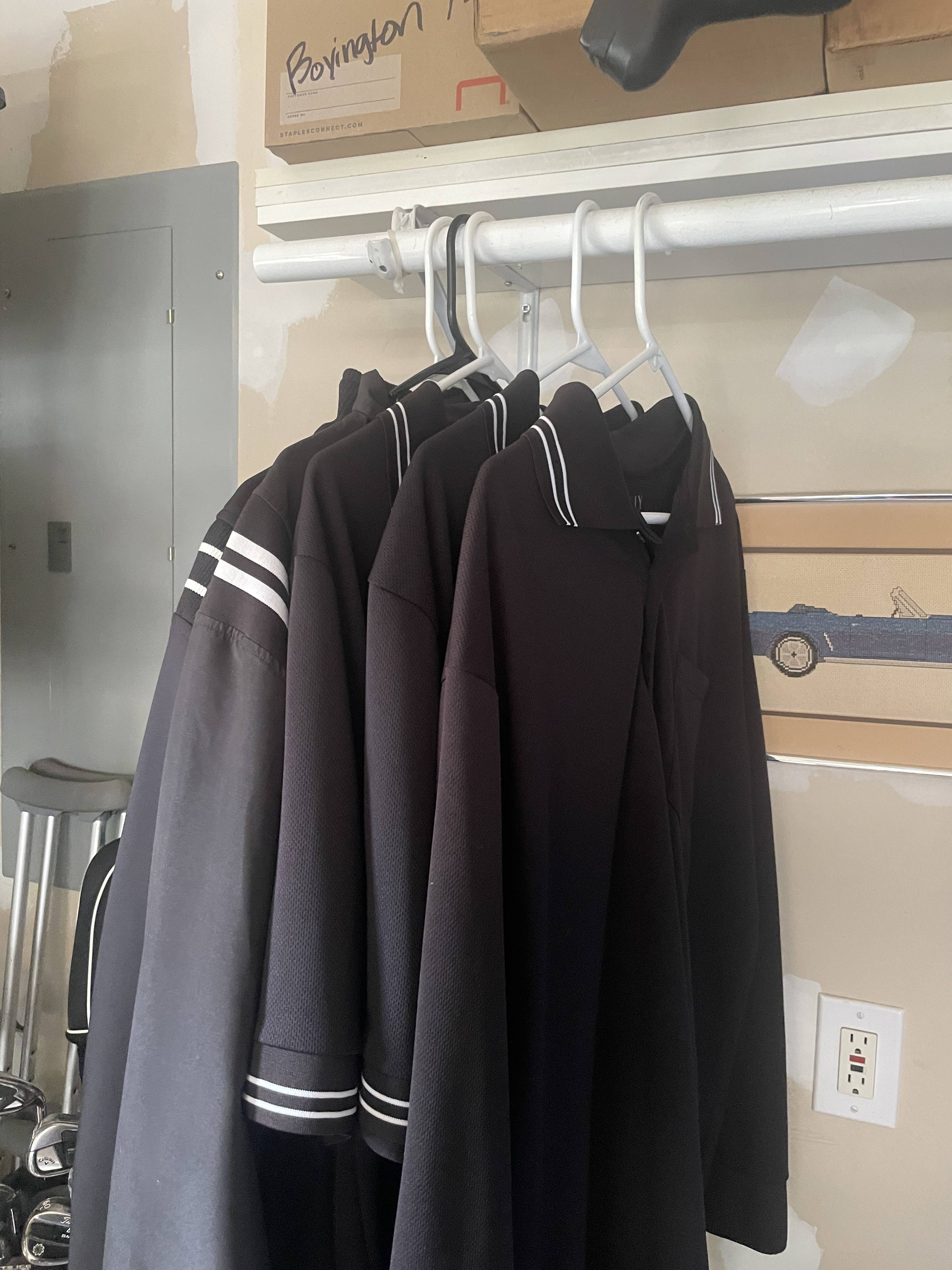
Free to someone that can use them. I have 3 Smitty black shirts; L-LS, L-SS and M-SS, a Smitty pull over-L and a Majestic Themabase jacket-L. All are in very good condition. I am moving to a an area that does not wear these. Here’s the catch. You cover my actual cost to ship them to you. (hangers not included).
 1 point
 -
Love the cap crease1 point
-
Little League has its own batter's box dimensions. I don't call LL, but I've spoken to dozens who do, and too many "coaches" and admins think there is no difference between LL and every other brand of big boy baseball. These are the same coaches and admins who don't know that fast pitch girls' softball has a longer box on the front end.1 point
-
I wrote this about 6 weeks ago for catharsis. I wasn't sure about posting it, but what the heck. I've been at this umpiring thing for 25 years. I have seen a lot of baseball and a lot of partners. Yesterday was a whole new experience for me. Yesterday (Friday) actually started out on Thursday when I texted a new-to-me partner with my introduction, when I would be arriving and "Bring black!" because I like wearing black. About five hours later I received a message from my partner referencing his military career as a captain in the US Navy and that he only takes orders from superior officers, his assignors, and his wife. He has worked with 250+ partners and I was only the third person who presumed to be above his station because I was assigned as the plate umpire in a children's baseball game. When we met prior to the game I mentioned that my text was not intended to be an order as a way to break the tension, which was followed up with him advising my that he had been to 3 umpire schools, umpired in the Armed Service League, and he worked with 250+ partners (again). He said he never really understood the whole hand signaling thing, so we went through the typical pregame discussion about coverages, rotations, and hand signals. During the game he did things that suggested that he really didn't have a good understanding of proper positioning, communication, or, for that matter, how high school baseball was played on the field and off the field. As an example, when the bases were loaded and the infield was in with less than two outs, he was in on the outfield grass Little League C. A couple of times during the game I offered a suggestion and was summarily ignored. In about the 5th inning he said that the home team was acting unsportsmanlike because they would occasionally make some noise as F1 was delivering a pitch. If it was that bad, I said, I would have put an end to it. I told him that I didn't think it warranted any intervention and he once again referenced his credentials and how I had nerve to presume that I knew better than he did. (in retrospect, if he thought it so egregious he should have squashed it) The game went into the 9th tied up at 2-2. The visiting team got a couple of runners on and became loud, especially since their JV team joined them (their game had ended already). They began to do things to distract F1 as he would deliver a pitch and I told them to knock it off. Visiting team scores five in the top of the ninth. Between the top and the bottom halves of the inning my partner came in to tell me I should have done something sooner. Home team goes quietly in the bottom half. Game over. As I am handing baseballs back to HTHC and shaking the hand of VTHC, my partner approaches VTHC and advises him that he will be sending a report to the state organization about the other team's behavior. The coach is confused and says there is no need to do that and my partner insists that there is. As we begin to exit the field, my partner tells me that I was played by the HT and I should be embarrassed. He tells me that he will be reporting me to the state as well and I stop walking with him. I then tell him to get my name correct and I spell it out for him. As I walk to my car I have a lovely conversation with one of the parents for the home team about the game, his son, and how beautiful a day it was. When we are at our cars I said that he seemed to take offense very easily and that for someone who went to 3 umpire schools he was out of position a lot, didn't communicate at all, and seemed entirely overmatched in a midlevel HS game. He then asked me if I wanted to settle this like men. I asked him if he was challenging me to a fight. He asked me the same question and reiterated that he would be sending a report to the state. I told him to go ahead and to make sure he sent me a copy as well. He said he wouldn't, I called him a punk, and he drove off. Anyone who knows me will probably tell you that I am fairly low key and there isn't much that gets me all revved up. This guy did it because he was, as my eldest son would say, aggressively stupid. Not only that, he was not good as an umpire. He struck me as the kind of guy who has to hold the upper hand in every relationship he has. I spoke to my assignor about the pregame text, the in game performance, and the post game antics. Apparently this is not the first time this has happened. This person is only the second person I have asked to never work with again. All of my umpire friends will know what to expect should this name appear on their schedules. Thanks for the therapy!1 point
-
Agreed. Big P it is 100% descretion of the official. Any other level he gets run.1 point
-
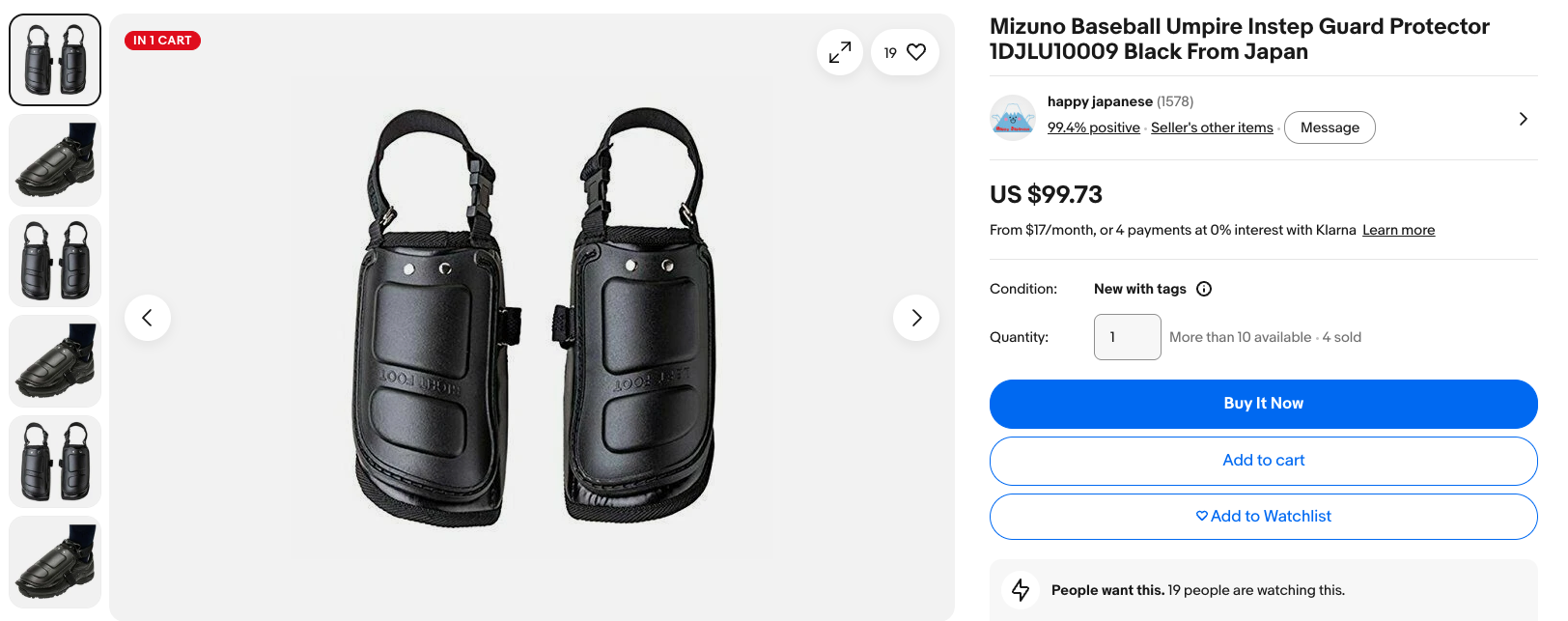
Mizuno Japan beat you to it, TMiB.
 1 point
 -
I am not harshing on your mellow, but, for me, no. Just no.1 point
-
Hey everyone, I finally got my left knee replace a week ago (and will get my right one done in September). Thus, my season ended early but I had some success by getting picked to do the State Quarterfinals this year. Still got the goal of getting the plate on the championship game but that will have to wait a year or so. So since I am laid up and bored and achy, I started thinking about getting a tattoo on my scar (not really going to go get one, just thinking about it). I came up with one and asked AI to produce the picture. The description first base umpire down in a stance straddling the first base line looking at the foul pole and we only see his back and butt -- with my scar being the foul pole. Hey! my balls would always be fair! AI still has a ways to go. What I got was: Anyone got a thought on what their scar tattoo would be on a knee replacement scar? lol
 1 point
 -
[deleted because embarrassed what I wrote.]1 point
-
Aiding the defense? My instinct was it was hurting the defense by leaving it ambiguous if the timed run scored or not until it was too late for the defense to appeal. In OP for example, declaring that run as scoring would (maybe?) make the defense realize they should appeal that runner since he never retouched.1 point