MadMax
-
Posts
5,139 -
Joined
-
Last visited
-
Days Won
317







.thumb.jpg.6dc4b62d5897857f93d53c1c3e9699a4.jpg)


Recent Profile Visitors
44,939 profile views


MadMax's Achievements
5.5k
Reputation
9
Community Answers
-
The DX Enduro is no more protective than its siblings (DX Kuta and DX Mk2); it’s simply (a bit) different in the padding vest, and how that padding behaves in high heat & humidity (especially on a daily/frequent basis). The employment of D3O on the Enduro ensures mesomorphic energy absorption (instead of mere compression, which is why open-cell monsters such as the WestVest Gold are so bulky) as well as moisture-shedding. The Kuta and Mk2 employ Corvalta, which behaves similarly to D3O, but without the brand-engineered pedigree. Would I use a Kuta or Mk2 in a pro-level or high-college game? Sure will, I’ve done it before! But if that same game is going to be in 85°+, with high humidity, and it’s a full-9, or the second of a doubleheader, or I’m doing both of a doubleheader, and I’ve got the choice of an Enduro… I’m taking that moisture-shedding characteristic of D3O every time.
-
Professional baseball aside, this is the best and only advice to give to amateur umpires. ... but then you/we get these locUl colleagues – assigners, "evalUators", "mentUrs", umpires-of-inflUence – who treat Balks (more to the point, the calling of Balks) as merit badges, or collectible Pokémon cards, or Chuck U Cheese tokens to be cashed in at the end of season (or, at the winter meeting prior to next season) on the locUl association's Best Umpire (With the Best War Story) Plaque. To wit, they urge ("influence") colleagues to "get that one!", "get those Balks", "git 'im for dat!", and they use strictly / exclusively Professional examples, like this very one here, to illustrate "what to look for". Ya know, while it wouldn't eradicate these locUl "interpretations", a national archive of these "guidance materials" (videos, diagrams, etc.) would be extremely beneficial. 🤔 Huh! What other institution has "National" in its name?? Hmmm?
-

Are baseball batting gloves part of the uniform or equipment?
MadMax replied to Steve Jones's question in Ask the Umpire
<Sarcasm><Skepticism> Who is "we"?? This is my game, and in my judgement, that 13-year old kid doesn't / shouldn't need to have another set of batting gloves, or an (oversized) sliding oven mitt spilling out of his back pockets on his scrawny arse! He's not wearing his uniform properly! This wouldn't be tolerated back when I was playing! Heck, I know I'm right on this one! We discussed it at our association meeting at the Kiwanis Lodge back in January. Louie even brought out his casebook! Even though we had this new guy in the group, who had just gone to Ump School, what does he know? I've been calling ball games while he was in diapers. </skepticism></sarcasm> -
Aggressively athletic-looking? Ventilated fabric construction (instead of leather)? Cannot be polished, and ain’t shiny? Approved!
-
Nope. There’s absolutely no way that’s a “production” “Power 13”. Those are football shoulder pads, likely off a “skinny” set (such as for QBs and Receivers), and riveted to a bridge plate, and to an edged foam pad beneath. Sure, they did a pretty nice job for a one-off, but there’s over a dozen “red flags” that paint this as a one-off, scratch-built CP… made with Riddell parts. If you think you’re biddin’ on or gettin’ a mythical Riddell Power… you ain’t.
-
No. Not to be pedantic, but 2 batted balls – and their conditions – supersede this. One is a Balk (in NCAA & OBR), the other is a Catcher’s INT (CI). Okay, sure they’re both INT, and kill the (live) ball, but they don’t result in an Out.
-
Warning track?! I’d have him run… the bases!! Properly. Touching each and every one, in order. Do 1 lap of the bases for each teammate on the roster, who he shortchanged / underserved by being a dumbass. Do ya got a 25-man roster?
-
Rules citations aside, let’s go with your gut intuition – you felt that (your) Runner did something improper (by not re-touching 3B on Last Time By (LTB)). You said as much. Now, the defense might have been tipped off by you directing your Runner to retouch, but they were compelled to appeal. Obviously, an umpire witnessed how your Runner improperly ran the bases (and didn’t touch 3B LTB), otherwise he would have signaled “Safe” on the appeal; we are trained to not call Out a Runner who we did not see do a violation or improper action. So you’ve got yourself (your Runner’s coach), the other team, and at least 1 umpire who felt he did something improper. I think your Runner’s in the minority. Who are these others?* *- the real effect hits home when you say this in Jerry Seinfeld’s intonation.
-
You've determined your own answer... ... sand the back of your head, and apply some pine tar.
-
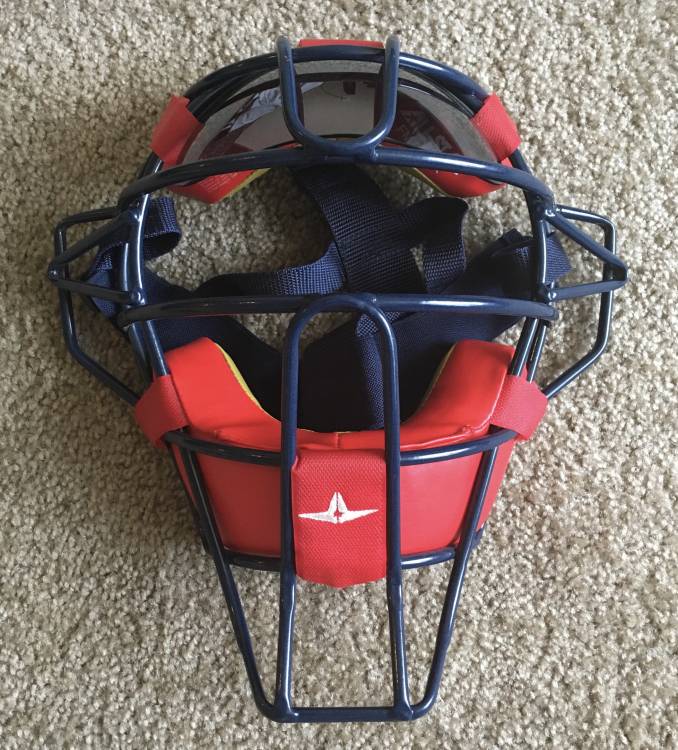
Like this one? Yeah, it draws a bunch of attention. It's only really an option on a "still wearing 🤬 navy" game, or an Eric Gregg -throwback game. If @DerekGDS issues red pad socks before sky blue or sand-tan... I'll toilet-paper his house. #DoNotNeed
-
A ding for who, dd? Jimenez, because he called / signaled HR “too fast”? The ball arced in front of the pole – I’ve seen plenty of Umpires and umpires misread that. Surely not Tumpane (acting CC), because Shelton badgered him (and the crew) beyond what was reasonable? I watched the MLB.tv Condensed Game (different views than what @Lindsay packages), and it looks like Shelton took exception to Miller (PU) already interacting with the Yankees F1, handing him a new ball, and disclosing that it was Foul. Either Miller or Tumpane stopped the Batter from completing his HR-not-a-HR circling of the bases, without allowing him to complete it, and forcing the Yankees to challenge it. So, a procedural gripe? An airing of rotten laundry 🧺, and an insinuation of bias (favoritism to the Yankees)? Tumpane at U3/3B could easily see that the ball never hooked the pole, and was truly a foul ball – no review needed. I think Shelton badgered him into it, and with how… blunt(?)… Tumpane’s rationale is, he likely conceded an official “CC review” to him. This “game management moment” – its handling – is a complete polar opposite to U#88 and Marmol.
-
writer wants 2 or 3 MLB umpires used
MadMax replied to dumbdumb's topic in Umpire News From Around the Web
Okay, thanks Wex… Altjough, I see the French are the holdout hosts who will maintain line judges. And I doubt that Hawkeye Live knows how to discern OBS or INT. -
writer wants 2 or 3 MLB umpires used
MadMax replied to dumbdumb's topic in Umpire News From Around the Web
What purpose or benefit (or gripe) would be served by reducing the number of umpires on the field? Certainly, it cannot be financial – the League doesn't pay anyone near enough. As it is, the League has installed a ceiling of age 55 on retention (of course, existing guys are grandfathered in/beyond), so it can't be that the upper bound (of that age range) guys are drawing a substantial amount of capital, so much so that it's affecting League revenues... or preventing the installation of (additional) technology. Technology will invariably and always improve; its infusion into the organic process of umpiring is, of course, the challenge (pun... acknowledged). Pundits and journalists (and critics!) need to be reminded – the Umpires were onboard with allowing "unlimited" ABS checks / challenges. So what's the problem? It's gotta be personal. Even when there's been controversial calls made, there's (begrudgingly) admission that there is rules support for that call/ruling. Okay, so there was a missed Balk, but how could technology ever "properly" determine a Balk? So, it once again comes to personal; and, U#88 really, really made this egregious because not only did he misapply or misquote a rule, but he created his own rule (em "my") and lied about its invocation (Rockies hitter requesting a ruling/judgement). However, I've never seen a professional sport league reduce the number of on-field / on-court officials, even with the infusion and improvement of "officiating" technology. - Professional tennis, despite having Hawkeye, still has a glut of line judges. - Professional basketball has 3 referees, and several (?) bench/desk referees. - Professional football has 8 (?) officials, as well as all the sideline and review officials. - Professional hockey went to 4 skating officials (2 referees, 2 linesmen), as well as review officials, bench officials, and goal judges. (Does baseball really, really want dugout officials?) - Professional soccer went to 5 officials; 1 referee, 2 line judges, and now 2 vested bench officials (up from 1) because of the... intense... shenanigans and theatrics that exchange between the clubs and the officials. This writer is bitter, and has a bone to pick, that's personal. -
"Gross" misses like this one? This is not a direct criticism of U#18 specifically; instead, this is (damning/shining) criticism of the "gotta catch it clean / well / properly to be a strike" camp-of-thought. ... which still permeates amateur baseball.
-
I can't quite make sense of what you're asking, considering that the ABS Challenge system does show – and is, in fact, based on – where the pitched ball crosses the plate. Completely irrespective of where or how the catcher caught it (or, "where the ball lands"). While I respect @BigBlue4u's perspective, for the discernment (calling) of Balls & Strikes, Baseball is disconnecting the factual, measured path of the ball through the strike zone from the "how" – the catching / framing / presentation by the catcher (F2).