Leaderboard




Popular Content
Showing content with the highest reputation on 03/20/2014 in all areas
-
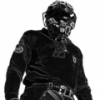
Man I finally make a magazine cover and you guys just tear me down! Sent using Tapatalk3 points
-
you had the legs for those ? legs yes!.............gut, uh no.. :shakehead:2 points
-
Think I would rather just be cold...2 points
-
Because (sorry to break this to some of you all) to most people the umpire's just don't matter all that much. To 99.9% of the baseball world excluding umpires they only notice or care about us when they need us, have to pay us, don't like it when or how we enforce the rules that we have next to ZERO input or influence in the drafting of. I only cared or had a thought of umpires when I managed/coached AFTER I decided I had suffered and paid enough to the sorry lot of local slackers who umpired for us with their hands out, their hands in the concession stand and their "we're doing you a favor by showing up" attitudes. Particularly in summer and travel ball and rurally based school ball, MOST of our brethren are only in it for the money and some kind of power trip at the lower levels. i lived in a rural area with these sorry types I am describing making up most of the umpiring ilk available to us. I eventually starting importing "good" and "certified" umpires from out of town but I had to really pay through the nose to get them. $75 per for 7 innings and $90 per for 9 innings CASH! It was worth it when the games mattered and the Legion Post fronted the cost but it required us to buy less SWAG for our players and get a lot more aggressive with concessions, limiting fans bringing snacks and drinks to our tourneys, gate fees, and merchandise for the fans to make up the expense. So, get real. That guy looks like a "real" ump to 99 plus percent of the baseball "fans" and general public out there. Not very many really care. Sorry, but it's the truth. My two cents.......2 points
-
7.09(a) is the correct rule to apply. It allows for a bit of judgement with the statement that the batter must "clearly hinder" the catcher. The interps from the BRD use a similar play, except the batter unintentionally steps on the ball in foul ground on his way to 1B - in OBR, the BRD rules that time should be called and the batter called out for INT only if the act is deemed to be intentional. Since your OP states that the bat/ball contact is not judged intentional, keep the B/R on first base.2 points
-
Don't throw the baby out with the bathwater. We officiate a game in which the rules are less than perfect, and intent and principles rule the day. That "chitchat and repetition" may color in the lines that are crudely drawn in the rulebook that don't adequately portray the whole picture.BEST ANSWER2 points
-
I disagree with the assertion that a throw must be made for BI OBR and FED both indicate any action by the batter that hinders the catcher's attempt to make a play shall result in the batter being called out. Nowher does it indicate that a throw must actually be made.2 points
-
Don't throw the baby out with the bathwater. We officiate a game in which the rules are less than perfect, and intent and principles rule the day. That "chitchat and repetition" may color in the lines that are crudely drawn in the rulebook that don't adequately portray the whole picture.2 points
-
I'm with you...Mountain Dew and Captain Crunch. Always seems to be more ejections in the first game of a DH when I eat this.2 points
-
This is a good example as to why you should keep moving as swipe tag plays at home plate develop. If the HP umpire continued to adjust (even if it requires rotating into fair ground) and stayed on the "hip pocket" of the catchers glove hand side, he would have been in great position to see the missed swiped tag. Staying stationary here might case the HP umpire to miss important elements of the play.2 points
-
This season my league is actually threatening to enforce the dress code, yay. BUT. Somehow I'm still on their roster and last week they sent me a league jacket that is required to be worn by umpires during rainy or cold weather games. I wouldn't have a problem with this, but my time on this site has forced me to be in pain when I think about it. It's dark green, for one, not blue or black. It doesn't fit right to be worn at the plate, and it has the association acronym on the right side of the chest, across the most redundant pocket I've ever seen. The absolute worst part is that it says "umpire" in all caps across the shoulders in black. About four inch letters. Not only will they be hypocrites of their own code, but they get to look hideous while doing so! Way to crush your own guidelines, small town LL!!1 point
-
Guys, I was wrong. My understanding of the FED rule is that a quality throw is not required, NOT that a throw is not required. I was thinking incorrectly. I am of the same thinking that johnny is in this post above. What you're posting sounds more like the NCAA/OBR version of the RLI rule. Didn't FED change their rule just a few years ago and say that a quality throw is not required, and if the B/R is outside the lane when the throw is made, it is RLI no matter what? It was not a rule change, just an interpretation that a quality throw is not required for RLI (that's the difference between FED and other codes). The rule has always required actual interference. FED 8-4-1-g-1. "This infraction is ignored if...the act does not interfere with a fielder or a throw." If a throw is made, and the BR is in the throwing lane, he is presumed to have interfered even if the throw is 10 feet over F3's head (no quality throw required). If the BR is out of the lane on the foul side, and F2 throws from fair territory, there was no INT, so no RLI.1 point
-
Yes, because this topic has been beaten to death on this forum. Guys, just match your partner unless your association or state is strict about it. (In 2-man, you can't even see the plate guy's undershirt most of the time so it doesn't matter) Can you see the plate guy's undershirt in 3-man? :P1 point
-
Could be worse...
 1 point
 -
I wear a ring on my left hand. Not sure of issue. Now the rest of the stuff? I'm wondering what the purpose is of him being on the cover. I bought the baseball balls and strikes dvd and don't understand how they come up with some of the material. I am an instructional chairman and I would not use that dvd to train my high school unit. I wear a ring on my left hand. Why? 1) SWMBO would kill me if she saw me without it, 2) association allows it, 3) I love my SWMBO. Sent from my iPhone using Tapatalk1 point
-
Karma's a B!@#!1 point
-
I wear a ring on my left hand. Not sure of issue. Now the rest of the stuff? I'm wondering what the purpose is of him being on the cover. I bought the baseball balls and strikes dvd and don't understand how they come up with some of the material. I am an instructional chairman and I would not use that dvd to train my high school unit.1 point
-
So sorry for you UMPIRE !!.1 point
-
johnny, That's not quite right. Even in FED, you must judge that the runner being out of the lane actually interfered with the fielder or the throw. If the runner isn't in the "throwing lane", he's not guilty of RLI even if out of the lane. JM1 point
-
Why would they even use this pic! Why would they even use this pic!1 point
-
I'd like to know what is he doing? You see his plate shoes? Dirty and torn? Grey ball bag?1 point
-
I don't pregame either of those. If my partner doesn't know what I am doing when I go to him on a half swing, then I need a new partner.1 point
-
I tossed HT's cleanup hitter in the 1st inning of a state tournament game for MC. Absolutely automatic. Gave HC more leash than I normally would; he stayed. I still think I probably shouldn't have changed my ways. MC is a safety concern so there should NOT be any extra rope on something like that, no matter what the stakes. Most other cases I recognize that they are fueled by emotions and they may get a little more slack. They may be trying to fire their team up etc. All part of the game. To a point. Sent from my XT1080 using Tapatalk These kinds of comments are EXTREMELY contradictory. Extra rope is extra rope and should apply to all situations equally, IF you're going to give it.1 point
-
6.05 distinguishes between a fair and foul batted ball being struck by a bat a second time. Fair - out. Foul - requires intent. Perhaps apply the same logic? 7.09 wording in LL does not have the new OBR wording. The OBR interp when it had the wording still in the LL book was that if a kick happened in the vicinity of the plate play on. That should apply here. Don't lose sight of the fact that in the OP the ball is loose because F2 screwed up.1 point
-
LOL, that is way too complicated, and I have enough things to worry about in a game besides where you're stepping or what hand you're pointing with. I wouldn't even pretend to agree to that in a pre-game.1 point
-
absolutely if determined to be non intentional, use 7.09(a)...........the rulebook, although poorly worded at times, is fairly complete if you add in the interp manuals you should be covered........the use of 9.01c should be reserved for that time when your pitcher hits a seagull with a fast ball turning the poor bird into dust and feathers.......most everything else is covered in the book or interp manuals..... Insert plug for CC's BRD........all primary codes and most interps as well..1 point
-
Thanks. That's what I thought, but reading this thread, I was beginning to wonder. The difference is in the similar play where the ball goes back to the pitcher (not that this is required) and play is relaxed. Now F1 wants to appeal and throws the ball over F5's head and into DBT. OBR: No further appeal. FED: Can still appeal. NCAA: It depends (on whether OTHER runners advanced on the overthrow)1 point
-
Call RLI when there's no throw and see how fast you keep getting better games. (Hint: you'll be working JV for a while) As Gil stated and cited, there had better be a throw attempt for Runner Lane Interference1 point
-
You can go in and make those changes. At least as far as the iPhone version is concerned, go to "Plays" down the bottom, select the play you want to change (eg "Jones singled to 2B ..."), select "Edit Play", and you can make the changes needed: hit to error or error to hit, who the fielders were, etc. I was using it for tonight's exhibition between the Dodgers and Australia (or this morning's game for most of you guys) and liked it. If I'd used a book it might have been smoother and quicker, but more because I've not used the app before. Didn't need to use a manual or look stuff up, just went and used it and was able to work it all out. I'd probably find the iPad version even more useful given the screen real estate and therefore the data that can be shown on one screen all at once.1 point
-
you made the wrong call; but you learned a great lesson--ALL COACHES ARE RATS1 point
-
Sit 1--has to be a throw to get a out for interference Sit 2--no throw has to be made to have interference1 point
-
They can show any other logo they want. They aren't under contract with Wilson, MLB is. Heck tons of guys with the original Douglas West Vest show it off all the time with a plate coat and that most definitely isn't a Wilson. Lots of guys have the TW logo showing on their pads as well. @Platejob29 At least they don't duct tape their Riddell Power like Vanover does I don't know about that, I think @Txump10 should do that to his Power since it should have been mine!1 point
-
Rolo, Nope. He is free to return as pitcher even if he goes to the bench when subbed for. Unless he's been removed for an excess conference or his sub takes too many warmups. JM1 point
-
To simply answer the OPs question a throw is not required. BUT go out there and use common sense!1 point
-
I too disagree that there must be a throw. A pump fake and no throw, if it is judged that the throw wasn't made because of the batter, then you still have INT. But F2 has to do SOMETHING. Just standing there is defensive indifference. Hence the term "ATTEMPT" as mentioned by my esteemed colleagues in previous posts. However, this video doesn't really back that up since there WAS a throw. As far as situation 1 RLI, I need a throw. And a savvy F2 is gonna drill BR in the numbers if hes running out of the lane.1 point
-
I get the feeling my Mtn Dew and cheap bubble gum is not up to scratch...1 point
-
Hie thee to a podiatrist. You don't want to take medical advice from a bunch of internet wannabees, and you don't want to risk further injury from the rubbing. But if it isn't going to cause further problems and you can stand the pain, so be it -- or maybe there's some sort of splint or padding that can be temporarily used between the shoe and the calf.1 point
-
Call time before you point, then there is no question as to what you are pointing at, especially if following the mechanics described here. If you call time and come out from behind the plate the BU would have to be a bit daft to confuse that with a check swing appeal. IMO makes perfect sense for this situation. To stay relevant to the question asked, I follow pretty much the same process the other guys here do. So what happens if you have a batter get hit by a pitch AND check swings? Calling 'Time' does not signify an awarded base. In this situation, 'time' indicates that the batter was hit by a pitch. You still have the action (or nonaction) of the batter on the pitch (I.e. check swing, intentionally HBP, pitch in strike zone) Edit: further thought added Seems pretty simple. When the batter is hit with the pitch, immediately call time. If there was a half swing, then go to your partner with your left hand, "Jim, did he go?" If your partner says yes, then tell the batter to "stay here" and announce, "Then that's a strike. The count is now 1-2." If your partner says no, then you could point the batter to take his award. or you could not point and just tell him to go to first.1 point
-
Call time before you point, then there is no question as to what you are pointing at, especially if following the mechanics described here. If you call time and come out from behind the plate the BU would have to be a bit daft to confuse that with a check swing appeal. IMO makes perfect sense for this situation. I call with Daft all of the time. I AM in Georgia.1 point
-
What I hate is when they change the style, then I go buy it, only to find out it was because they lost their luggage.1 point
-
I give the no ej to the mgr. He materialized INSTANTLY and got the focus off of his players and onto himself. JB made a great call. F9 made a near perfect throw. F2 made a great tag. But R3 made the EXACT slide he needed to make. JB could have EJd the whole battery. And been absolutely correct in doing so. But had the mgr not been so quick, ther would most likely have been at least one ej. Great vid.1 point
-
When this happened in MLB it was debated in this thread: http://umpire-empire.com/index.php/topic/44585-marlins-dodgers-interference-play BAM posted this info from MLB: "Posted 01 September 2012 - 09:08 AM MLB sent out this clarification on this play to all evaluators: MLB sent us clarification of the play you asked me about last week. I've copied and pasted MLB's email to us... In the bottom of the 7th inning with runners on 1st and 2nd and 1 out, the batter hit a pop-up near first base and, as the first baseman was moving to field the ball, the runner on first interfered. Meanwhile, the ball fell untouched and rolled into foul territory before first base; however, the infield fly rule had been declared. The crew correctly ruled the runner from first out for interference and returned the batter-runner back to bat counting the foul ball. On this play, the batted ball initially landed over fair territory but was untouched as it rolled foul and stopped over foul territory before first base. Since the ball was foul, the batter-runner cannot be awarded first base or, as in this case, declared out by the infield fly rule. Also, the batter already had two strikes and as with any foul ball with two strikes, the previous count applies. Note, if the batted ball had been ruled fair on this play, the runner who interfered would be declared out as well as the batter-runner for the declared infield fly. If the infield fly had not been declared, the runner who interfered would be declared out and the batter-runner awarded first base unless, in the umpire’s judgment, the interference was intentional with the obvious intent to break up a double play. In that case, both the runner who interfered and the batter-runner would be declared out."1 point
-
What makes you think the defense was going to get two outs absent the interference? On a play like this, 2 outs would be a major outlier. I don't see this as "unjust enrichment" to the defense. There are two acts, the batted ball and the interference. Rule 2.00 states, "If a declared Infield Fly is allowed to fall untouched to the ground, and bounces foul before passing first or third base, it is a foul ball." That suggests an intentional act (of omission, if you will) by the fielder that is absent in the situation we are discussing. I simply don't see how the rules apply so clearly to this situation. As I've said, I'm troubled, but I see the sense of what you all argue, but I really don't know what I'd do in this situation. In any event, rather than rehash the same old same old, I will retire from the debate and hope I never have to deal with it. It's simple... you learn the rule and the application and in the event you have it in a game, apply it correctly. OR you can do whatever the heck you want and lose a protest, your choice As an umpire you enforce the rule book, preserving the integrity of the game, and use common sense and fair play when something is not specifically covered. This IS covered so you don't get to pick and choose your own ruling1 point
-
That was an excellent call!1 point
-
In bigger games tensions and emotions run high. What you should do is more preventive officiating. Recognizing and shutting down potential problems before they start. Should you show more restraint? Perhaps. It is what it is. EVERYONE behaves differently when it's the post-season. An ejection that wouldn't be questioned in early March will receive much more scrutiny in mid-May. Game administrators usually come from a player/coaching background. Their mentality is, "Let the players decide the game." I think the players/coaches do decide the game on the field which includes if they choose to be ejected. Here's the deal... Work the game as you would work any game. Bust your ass, work hard, and control the game. Don't give more leway for misbehavior. Do show some restraint if the call warrants it. Was it a big play? Was it a huge situation? Were you out of position? Are you less than 100% sure of your call? I'm going to give a coach more rope in any of these situations wether it's February or May. He's emotionally involved. He's going to be upset. He's not going to get personal and if he does, he's going to go. I'm going to let him vent. I'm going to explain what I've called. I'll let him vent some more. I'll warn if/when necessary. Then the ball's in his court. It's up to him at that point wether he stays or goes. If you're dealing with a player(s), use the coach to get them under control. It's a pretty good bet if a player is acting stupid and arguing someone is coming. Tell the coach to get his player(s) under control and then you'll talk. In regards to the situation with Burly last year at the CWS, the NCAA backed him in his decision to not eject. They also would have backed him if he had decided to eject. That's a good thing. Burly handled the situation the best way he knew how. While stakes were high and emotions were amped, Burly remained in control. Why? Because he'd been there before. I have it on good authority that the NCAA never made any statement about doing everything possible to keep people in the game. Burly chose not to eject on his own. He is one of the best in the country. There aren't many in the country who could carry his jock. And that's why he was able to get by with not ejecting anyone. He commands that much respect. And he's a great guy on top of it! The bottom line is umpires must learn how to keep people in the game as much as, if not more than, how to eject. The easy answer is eject. The hardest thing to do is defuse the situation without ejecting. Handling situations really starts with how the call was made. You're going to have fewer situations to handle if you are in the correct position, fight for angles, have good timing, make the correct call with confident and convincing mechanics. These things earn the respect of coaches and they are less likely to argue if they believe you are doing a good job. I just worked 3 games on national television this past weekend. We had 1 coach on the field all weekend and it was an extremely mild conversation with the plate guy about a foul tip/foul ball. Did we get every call right? No. But did we work hard? Yes. Were we in position for every call? Yes. Were we professional? Yes. Did we take care of our business? Yes. That's why we didn't have people on the field.1 point
-
It's this: the Manager/Coach ratio on the board of directors who are determined to customize the league’s program to their own liking1 point
-
Carb up for 2-3 days prior to game day. Raisin bran, bagels and bananas game morning. Water and power bars all day long game day. UNLESS it is 8U- THEN it is Jack Daniels and morphine all game day.1 point
-
That's a nit pick? I call this 100% of the time. We have a few teams around here that love to start in the windup when the first guy gets on base. They try to get him go on 1st movement. If I don't call stepping off with the wrong foot, we've got a serious problem.1 point
-
Where they really are getting us is that $3.99 shipping cost. OUCH!!1 point
-
On the technical side, but yes, that's a start/stop balk. Moving his hands in that fashion committed him to pitch. Just because it's stupid and he gets no advantage doesn't mean you shouldn't call it.1 point



.thumb.JPG.dd204f311eacf15090682e8547271c66.JPG)