


Fittske24
-
Posts
1,083 -
Joined
-
Last visited
-
Days Won
22
Everything posted by Fittske24
-
How much did it cost you?
-
Jim, Can you being a few of these to Nashville? Preferably a size S, M, and L? This would be a good chance to check out the sizing.
-
These shirts seem to be pretty good. I ordered both a long sleeve and a short sleeve and the quality seems to be consistent.
-
Hey! just passing along a good thing..... :)
-
If you are interested in these two shirts they are available for 9 more hours. (at the time of this post)
-
I know some of you could care less about supporting the pink cause, but for those that do, here is an umpire t-shirt available on Teespring that supports breast cancer research. I reached out to the owner to find out how much is being donated and the reply was based on the amount of shirts sold the seller will be donating 20%-50% of the profits. I have been pubing this shirt of FB so some of you have probably seen it. If you are interested in ordering, see the link below. The seller also has a pretty cool "Umpire Strikes Back" that is available. Me being a Star Wars fan...i had to get 2 of these! One long sleeve and a short sleeve! lol ***FYI....both shirts are only available for the next 5 days.*** https://teespring.com/umpires-eject-cancer-tee https://teespring.com/umpire-strikes-back-tee
-
Do something like this.....


- 10 replies
-
- 12
-

-
This is always the BU's play back into first (in a 2-man system). BU should be reading the BR as well as having an understanding where the fielders and the ball is. If the BR makes a hard turn, the BU should be prepared to take the BR into 2nd. If the BR slams on breaks and there is a play back into 1st, the BU should drop step back in the direction of 1st and stop in the cut out for the play. This type of play is exactly why we don't "stare down" batter runner touches of first. If the BU is simply looking for the touch and only watching the runner, the BU may miss the backdoor play.
-
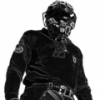
List of face masks worn by active MLB Umpires as of 6/21/2012
Fittske24 replied to Fittske24's topic in Umpire Equipment
Who says i'm going to update it? :-) -
List of face masks worn by active MLB Umpires as of 6/21/2012
Fittske24 replied to Fittske24's topic in Umpire Equipment
This list is almost 3 years old. I am 1000000% sure it doesn't reflect the current MLB full time and call up roster. -
Verbalizing "No Catch" on D3K Causes Problems
Fittske24 replied to Mudder's topic in Umpire Mechanics
I try to let the play dictate what mechanics to use. Remember that our "safe mechanic" has many meanings....."Safe", "No catch", "that's Nothing", "balls in play" etc. To everyone else (Players, Coaches, fans) , safe mechanic only looks like safe. So I try to use it only when the situation calls for it. - On DK3 I will give my swinging strike Mechanic (pointing strike mechanic) with arm extended. - If it is unclear to the off. or def. that the ball was dropped (i.e. short hop), i will also give a verbal "No Catch" - I take a read step right or left as needed to see the possible tag attempt. - If TAG is made, I give a verbal "On the tag" and ONLY give my OUT mechanic - If BR runs to first or a TAG is attempted and MISSED, I will give the SAFE mechanic. - If no TAG attempt is made, and Batter does not attempt to acquire 1st, I will leave my right arm extended (pointing strike mechanic) until runner steps out of the dirt circle....then give my OUT mechanic Here is a video of me using this method.... -
I'll offer my $0.02... since I am in the middle of this very journey as we speak. YMMV... Q: Do you need Milb experience to work D1 baseball? A: No....but it certainly helps. As Milb umpire you get game speed and game management in heavy doses. Your job is umpiring and you get anywere between 80-160 games in a season based on your level. For a non Milb umpire it may take a few years to reach equivalent game counts. Yet in still a newly released Milb umpire doesn't just walk straight onto a D1 field. Most Milb umpires need some sort of "deprograming" in order to work collage baseball. The game at the pro level and the Ncaa level is not the same. The game management, ejection triggers, warnings use of language etc are all different. So most Milb umpires will work a few seasons of lower level college ball before breaking into major college conferences. However that journey can be a relatively short path. For the non Milb umpire the path is different but the end goal is obtainable. It is certainly a process. And keep in mind you will be competing against Milb umpires that have lived ate and slept baseball for years. Pro school helps, but it is in no way a golden ticket. Good core training regardless of where you get it is a must. Once you are ready to break into college ball the first thing you need to do is Inventory your look… Dress like the level in which you are trying to achieve. If you don’t have poly wools go out and get some. Make sure you get them tailored properly. Make sure your uniform is “TV-Ready”. Keep your shoes shined, pants (and caps) creased, and shirts wrinkle free. Chances are there will be no more parking lot dressing, so make sure you have a gear bag with wheels that you can easily go from car to locker room. Be prepared to travel a lot your first few years…. Expect to work a lot of Juco, NAIA, and DIII level games your first few years. Work every game with the utmost professionalism. Treat every game like it’s the 7th game of the world series. Coaches in these leagues can either jump start or break your career. Unlike high school, these coaches have been hired for the sole purpose of running the baseball program. They are not teachers and they don’t care about lesson plans. They care about wins and losses, plain and simple. If you have a good game, they are not afraid to let you know about your work. If you have a bad game they are not afraid to let you and your assigner know about it as well. So work hard, look good, hustle and above all else know the rules! Find out who the top assigners are in your region… All of the top D1 conferences in your area will have a conference assigner. Most of these guys will also assign smaller NAIA, DII, DII conferences. Some of these assigners will use these conferences as feeders for the D1 conferences. Get to know these guys. The top Coordinators will usually promote try-out camps and clinics through your local assigner. Advancement happens in the summer, fall and winter.… The best way to move and get seen is during the summer and the fall. Find out if there is a college summer league in your area. It will be easier to work with some of the D1 guys during the summer. The D1 guys will have great feedback for what it takes to work at the D1 level. Also if you do well, it can help you get on the radar for getting assigned to some higher level games assigned by your association. Also the summer is usually a more relaxed environment. Plan to attend a College camp or clinic in the fall….. Usually these camps are attended by assigners responsible for D1 Non-conference assignments, as well as conference umpire appointment. Most of these camps/clinics will have cage work, rules application, and live games. Same rules apply just as they do in the regular season…. work hard, look good and hustle when it’s your turn to shine. Attend your Local NCAA superclinic…. This will ensure that you are up on all mechanic changes and rule changes for the upcoming season. This is also a great opportunity to network with all of the Top college umpires, assigners, and evaluators in your region. Don’t be afraid to talk to and introduce yourself to them. This clinic is also required for post season assignment for all of the NCAA divisions. Once you complete this in year 1. Wash, rinse, and repeat." As you do a good job coaches notice. ..they will tell your assigner. You may get asked to work higher level games with some of the better umpires in your group. Remember every game is an audition... if your progress continues you will be work D1 in no time.
-
I sure we will see some clips from this camera view during next year's Ncaa mechanics video review.
-
I applaud the crew for getting together to get the call right, but what about the mechanics of U2 here that could have put him in a better position to rule on the play? I would have liked to see him step up with his left foot allowing him to keep his chest to the ball, keeping him square to the play. Instead, U2 attempts to avoid the bounding ball by running toward the SS side of 2B (With his back to the play). When he finally turns around to see the play, everything (Ball, Fielder runner) is arriving at the same time. it appears like the play "blows up" on him. Also, regardless if you have OBS, interference or nothing on this play, something has to be signaled. Either a firm point with that's OBS, or "Time" that's interference, or a safe signal with "that's nothing". This will help sell whatever you have decided to rule when the coaches come out of the dugout on you.
-
Just close your eyes and call what you see!
-
Stop watches are also needed for between inning timing. Some of the larger Div-1 schools are installing pitch clocks but all do not have them so a stop watch is needed. I also use them in games when there is no between inning or pitch clock rule being enforced. This helps me determine if the crew is allowing two much time between innings. Anything around 90 sec. is good. Anything above we need to pick up the pace between innings.
-
The frames on Oakley's are what's important. There are tons of aftermarket lenses that fit Oakley frames that can be had for under $40. Here are a few. Walleva: $24 for non-polarized $38.50 for polarized http://www.walleva.com/index.php?route=common/home Revant: $28 for non-polarized $32.00 for polarized https://www.revantoptics.com/ BVANQ Replacement lenses. $15 for non-polarized $25.00 for polarized No website but can be found on eBay and Amazon VOLT Replacement lenses. $15 for non-polarized $25.00 for polarized No website but can be found on eBay and Amazon
-
Ahhhhh....the old vintage west vest gold......The 1st cousin to the riddell power. It is the same plate design as the Power with a few slight modifications (Gap Flaps and addition of T-hooks) Personally I prefer the VWG over the power because of these mods.
-
So....... 7 pages....the moral to this thread is: Who Cares what CP you wear...JUST BUY A DELTA FLEX HARNESS!!! LOL
-
I would also say get the M/L.
-
What kind of engineer? Mechanical Engineer
-
The one thing I can't seem to look past in the U.E. products is how they still have plastic in the critical areas. Since in my day job I am an Engineer by trade here are the conclusions I have arrived at: The real argument comes down to which CP design type protects better against "Blunt force trauma" i.e. baseball crashing into the body. For Kevlar is all about energy disbursement. For ABS Plastics... the most important mechanical properties are impact resistance and toughness. The Kevlar works in the same basic way as the net in a soccer goal. Like a soccer goal, it has to "give" a certain amount to absorb the energy of a projectile. The key here is that it still "gives" meaning the body will absorb some of the force of the projectile. This explains why the UE chest protector and the shin guards still have plastic plates in key areas. Even though the UE does a good job of reducing the energy of a baseball, it still allows some "force" to get through. It will be this "force" that will cause damage to your shoulder blade, shoulder cap, collar bone, knee cap, or shin bone. All are areas that sit just below skin surface and can be broken with minimal force/pressure, thus require the extra plastic plate protection. But what about heart protection??? That same force that is enough to bruise the flesh under the UE can still be enough to disrupt the rhythm of the heart... this is not just a flaw of the UE this can be experienced with a standard CP also. However the plastic plates will do a better job of deflecting the force since the most important mechanical properties of ABS plastic are impact resistance and toughness Here are some other things to consider about Kevlar.... Kevlar textiles tend to absorb moisture. Very few general cloths are manufactured with Kevlar. Kevlar reacts well under a tensile force (stretching force) but badly under a compression force (pressing force) It is not used where compression resistance is needed. Kevlar reacts badly to UV light (sunlight) unless it is protected / hidden from direct sunlight. In order for Kevlar to be as effective as possible, it needs to be kept away from water and direct sunlight
-
Well if F1 ever pulls a gun out and starts shooting at you....glad to know you UE wears will be protected from the bullets. So until the "concealed weapon" rule is added to the rulebook...I'll stick with my hard shell.
-
This play is a perfect example of why you don't rush your out call on the front end of a DP at 2B in the 3 or 4 man system. The 2nd base umpire as no other responsibilities other than the out call and FPSR. No need to even look in the direction of 1st if you are the 2nd base umpire. Slow down, let the play terminate, then make your call. Everyone in the stadium will be paying attention to the back end of the play anyway. Great Job by the 2nd base umpire here, and good work by the other umpire who came in and played "rodeo clown" with the runner and assistant coach.
-
Too Bad those things weren't left to die in 1982.

