humanbackstop19
-
Posts
231 -
Joined
-
Last visited
-
Days Won
2
Everything posted by humanbackstop19
-
Fielders (even LH 1B-man) taking a throw from in front of the mound are taught to take the throw with left foot on base. It sacrifices a stretch, but opens up a target to the chest and mobility to move laterally into fair territory (can't go foul, cause the train's comin through) or knock the ball down in front of them if it's low. Because the fielder could not do those things, it supports a poor quality in the throw and justifies a no-call.
-
If you start in a proper 'C' you will step UP into the working area. I was taught you should be able to work your way to the back edge of the mound, and depending on how hard the ball was hit, be on the !B side of the back edge. From there, you pivot and retreat to get good look at any advance towards third. You can take your pivot and first couple steps while holding up the OUT signal (Much tougher if BR is safe at first to hold signal). 100% agree in pre-pitch signal was to stay home form PU, BU has all plays in the infield. This is good example where guys can get in trouble pre-pitch by starting too deep in C.
-

to call or not to call (interference), that is my question
humanbackstop19 replied to jms1425's topic in Situations
Excellent protocol to pregame situations and priorities like this. I'd bring up the post-game meeting as well. Anytime I see something like this I may initially disagree with (any close call for that matter), Im saying, "Let's talk about that......in the ......inning." We can all learn something, for better or worse if we communicate those things after. -
This link answered my question. Every MLB umpire worked deep B on steals at second with only R1.
-
Little off my OP, but this is one I can chime in on as you speak of R1/R3. I've been advised at a clinic the proper 2-man mechanic taught at pro school is to stick tight to your B position, don't drop step, and follow the ball. This prevents the tangle with a middle infielder, while holding the "angle over distance" philosophy of 2-man. You have the same angle at second base by just turning as the ball passes, while you can make a read step in towards home plate if the throw goes behind, or back to R3 from the middle IF making a cut.
-
I agree with your thinking, but CCA manual made a change this year saying, "umpires are not allowed to start in the infield and then run to a position out in the dirt looking straight down the baseline toward second base during a steal play." Do pro mechanics allow what you're saying, which in thought is nice?
-
Just looking for feedback. I'm watching a series of games which is using 4-man crews. Almost every U2 is set up in C with only R1. CCA manual gives choice of B or C (same as 3-man). I don't work 4-man too much, but I prefer staying in deep B. Puts me in a better window for the majority of SB attempts and make a read step if needed. In C it seems you can get blocked off by middle infielder taking the throw and bag on errant throw, or get straight-lined. Thoughts, feedback?
-
Nike Vapor Untouchable Turf Shoe 9.5
humanbackstop19 replied to humanbackstop19's topic in Buy, Sell or Trade
Sold. Please lock it up @Thunderheads -
Ebay link below to Nike Vapor Untouchable Speed Turf 2: Size 9.5 I have for sale. Wore them one time indoors on turf. Comfortable, but on the narrow side - need more breaking in. Main concern was not liking the solid black midsoles on them. I have them listed for $50 + shipping on Ebay. For this site I'll post at $55 w/ shipping included, or other reasonable offer. Retail for $110. PM if interested. https://www.ebay.com/itm/153870665997
-
Check with Jared Chizek form the IHSAA. He's the lead baseball guy for the state and would be able to point you in the right direction for an assignor. Also, check into the Iowa City Officials Athletic Association. They schedule a lot of games down in that area and have a web page listing their schools and contacts. Best of luck!
-
Iowa shared the same emphasis. In a memo two or three years ago, they asked umpires to address it at the plate meeting. We choose to continue doing it as a crew.
-
I have not tried the GD plate pants. I just go by the "if it ain't broke, don't fix it" mentality. The Smitty's have been great for me performance-wise in extreme heat and humidity (110+ degree heat indexes w/ high humidity) and the tapering is not an issue in plate pants like base versions.
-
Huge difference in the base pants. I got dinged at an eval camp for my Smitty base pants looking "blousy". I got the GD base version - totally better in the tapering down the lower leg. Can't wait to bust them out this spring to test performance. On the other hand, I have two pair of Smitty plates, have no plans on switching. Once they get worn in a little, they're fantastic IMOP.
-
One of my main partners and I pregame this as a pace of play issue and we make sure we address it at the plate meeting. We time the 60 seconds allowed between innings starting when all infielders have left the field of play. At 45 seconds, BU puts an arm up and works back towards 1B foul line. At expiration of 60 seconds, we're calling for a batter if one isn't ready to get in the box, or not allowing further warm-ups by the P if defense is not ready for play. If a batter does not report in reasonable time (PU judgement), the ball is put in play and a strike can be called - no pitch need be delivered. Never got that far, but at that point I think the 20-second clock would begin (we always have stopwatch ready for this if needed) and at 5 seconds remaining, another strike could be called if a hitter is not in the box ready (mirroring NCAA).
-
I curious to know how umpires are selected to work high school postseason through different states. In Iowa, there are a few evaluators that work around and watch umpires work. However, a big part of the selection process comes from coach recommendations. Are there any other states that rely mostly on coaches, or do any have umpires recommending umpires? I am not disgruntled (quite the opposite), but curious as I have a committee meeting this coming weekend and would like to share ideas. Thanks!
-
This is a perfect case in point where I WISH coaches would get into the rule book. I ask coaches at plate meetings to police their own dugouts, so we don't have to. We always look like the aggressors when we have to enforce rules like this, but it's our jobs. JUCO regional last year I ran way too many players back into their dugouts as an in-the-hole hitter timing up pitchers beside the on-deck guy (during a live ball even), despite me previously asking an assistant coach to address it. After several warnings they asked, "what are you gonna do, eject us?" My response, "By rule, YES, the next offender will be ejected."
-
All Star System 7! Pads are securely attached with velcro, but come out easily and can be washed in the machine.....Air dry
-
Anytime there's a force play on the batter-runner at first base, a play is being made on them; making it required they are inside the RL at 45'. If they're making a turn.....there's no play being made on them; so they don't have to be in the lane. If there is a play being made on them and they are running outside the lane after 45', they are running illegally to first base. A penalty only comes into play when interference occurs during the play.
-
NOOOOOOO! We have the safety bag in Iowa HS ball. IMOP (as an umpire and coach), it causes way more train wrecks at the bag than it is designed to prevent. Its implementation had nothing to do with the runner's lane either, nor does it prevent RLI (call it at least twice a year). I would estimate 95% of RH hitters run to first base illegally, but the interference rarely manifests itself.
-
Game Ending Walk - no runners touch - no appeals
humanbackstop19 replied to a question in Ask the Umpire
NCAA follows this guideline as well. Agreed, FED requires all runners to touch awarded or forced bases in this case. -
The logical answer is that Dodger catchers are better receivers/framers than National catchers. It is a measurable stat now for MLB catchers how often they can get calls on pitches out of the "measurable" strike zone called a strike. IMOP, it's all skewed though.
-
Not sure what pro mechanics are, but CCA also adds in 6-man section: B. When U2 goes out, the line umpire on the side the ball is hit also drifts to the outfield in that direction.
-
With 6 umpires, you'd think at least one, if not both of the guys in the OF would have gone out on this ball and been able to make a ruling right away on a lodged ball situation.
-
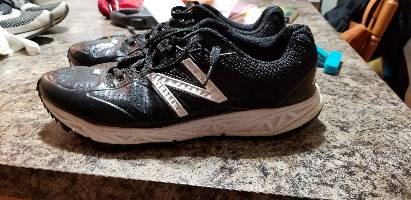
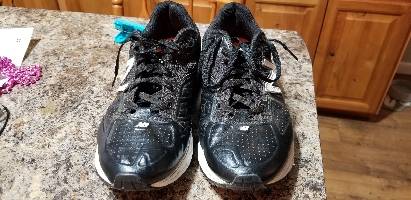
Used one season. Good condition. Replaced the insoles with an Under Armour set after dog chewed the others up. Asking $25 OBO + SHIPPING. PM for more info.

-
NCAA RULE: 8-3-h If a fair ball goes over the fence in flight or is prevented from going over by being touched by a spectator or by a fielder’s detached equipment, all runners, including the batter, are entitled to score; Note: If a batted ball hits the top of the fence while in fair territory and then bounces over the fence, it is a home run.