


The Man in Blue
-
Posts
5,241 -
Joined
-
Last visited
-
Days Won
230
Posts posted by The Man in Blue
-
-
There is all kinds of “wrong” in this whole thing. It is hard to say how much is participant hyperbole and how much is bad reporting, because it reeks of both. But taking things as they are presented ... (and admitting I know nothing about swimming) ...
1) It does not matter if the suit was school issued or approved. The official’s ruling was on how it was being worn at that time. The official made a call that was not only supported, but prescribed by the rules. The fact that the swimmer was not disqualified in any other events lends itself to this.
2) The first part that disgusts — and yes, “disgusts” is a strong word used intentionally on my part — is the Association’s follow up instructions to essentially ignore the rule.
 Associations need to FIX or DELETE rules that are archaic, contain verbiage that is either outdated, or do not accomplish their intent. If this rule is intended to prevent student athletes from modifying (or “rolling”) their uniforms, then write the rule to say that. However, as presented, that is not what the rule says. Sending a memo after the fact instructing people to ignore the rule is careless at best, reckless at worst.
3) Since the Association took that approach, I would hope that they would have supported the official had that call not been made. In other words, when the second-place swimmer’s coach protested with video, I would hope the Association would say “well, yes, that is the rule, but ... we’re going to ignore it.”
4) The next part that disgusts me is the claim of racism, sexism, and body shaming made pretty quickly by a fool who then states “There were three other swimmers who look just like [the athlete] and they weren’t disqualified.”
 Sorry ... all credibility you have is now gone.
5) Preventative officiating says it all and sometimes a no-call is preventative officiating. A VB Official I worked with once told me the story about a bra strap. He was working with a decorated female official during a post-season match. During warm ups, his partner pointed out a “well endowed” player wearing a non-uniform/non-neutral colored sports bra that could be seen from under her uniform. His partner said, “You need to go tell the coach that is illegal and the player needs to go change.” His response: “I am not going to go tell the coach that I was staring at her underage player’s bra. If you are comfortable doing that, go for it. Otherwise, it isn’t affecting anything in my judgment.”
-
 1
1
-
-
I agree ... it didn’t look like he was drawing lines to me, as that is usually done where the ball is perceived to be, not on the far side of the batter’s box. But the angry pointing and repeated gesturing on strike 2 ... yep, time for the toss.
I don’t usually jump on the broadcaster-bashing bandwagon ... but that was some homer-level commentary.
Anybody else getting sick of these players whining and throwing temper tantrums over calls that are not even close to being bad? I’m saying there are missed calls and then there are bad calls. Most of these aren’t even missed, let alone bad.
-
31 minutes ago, Aging_Arbiter said:
While I understand both theories on time/no time while cleaning the plate, We will just have to agree to disagree. It takes all of....what?....3 seconds to clean the plate? There's two of you on the field. I'm sure your partner can cover it alone for 3 seconds. Conversely, if you are working solo, and need to turn your back to the field to clean the plate, I agree with calling time.
There is a reason my story was specific to softball. It isn’t as applicable to baseball since runners can be off the base while the pitcher has the ball on the mound (at most levels).
That said, I developed a habit and I follow it in baseball. Why? Well, I don’t always know/trust my partner. But mainly, I just feel as if you should have eyes on a live ball (or related play) at all times. If I am taking my eyes off for an administrative task, I’m killing it. This is just my opinion, but it is a bad look to have a play break open while you are doodling around with your brush or lineup card. I also don’t want to be run over by an overly astute base runner or thumped in the ass with the ball while I am out of position and not looking.
-
Softball double-header ... a few years ago and I am working with a 20 year veteran. I’m probably 5 years or so in at that point.
First game I am on the plate; he has the second game. While we are changing out between games, I ask him if he has anything for me. I get the usual “No, no, you did fine.” Then he thinks a second. “Wait, I have a question. Why do you call “Time” every time you come out to sweep off home plate?”
I didn’t have a good answer.
His game behind the plate ... R1 and R3, wild pitch. R3 scores, R1 moves to second base. Pitcher walks back to the circle. My partner waits for her to get there and then comes around to sweep the plate. The pitcher walks to the back of the circle and sets her glove and the ball down so she can adjust her hair tie. The runner on second busts for third and I just smile ...
Of course, the defense HC wants her called out. I explain, “Coach, the ball was live, the pitcher no longer had control of the ball.”
Coach: ”But, he was brushing off the plate!”
Me: ”Yes he was.”
Coach: “Time was called!”
Me: “Who called it?”
Coach: “He did!”
I motion for my partner and meet him half way. “John, did you call time?”
PU: “Well. I guess I didn’t.” (Sheepish grins start to form on both of us umpires)
Me: “You know that question you asked me last game? I guess this is why.”
-
2
-
 1
1
-
-
No ruling. A conversation with the coach, but no ruling. The batter runner was smart enough to know the ball was still live. Unfortunately so were the defensive players. I guess everybody is smarter than the coach.
Personally, I try to be pre-emptive by putting up the stop sign or a “one finger hold” when I see the coach coming out.
EDIT: Well, yeah @JSam21‘s out.

-
Wait a minute ... if we issue an arm ban, how are the kids going to throw, hit, or catch?!

-
On 9/10/2019 at 9:14 AM, stevis said:
1.11j is the prohibition against jewelry. I don't allow rubber wristbands, I probably wouldn't allow this if I caught it. (Comment from the Rules and Instruction Manual: "If it isn’t something for a medical condition, it is jewelry!")
If I could pull this out of the Little League specific conversation for a moment ...
When you say “wristband” I am thinking a “sweat band”; aka, something of the athletic variety. No reason to consider that jewelry.
Those rubber things you refer to are not wristbands to me. They are bracelets ... aka, jewelry.
Braided string around the wrist? Bracelet = jewelry.
Braided paracord around the neck? Necklace = jewelry.
One that you will run into in girls softball frequently is the hair tie on the wrist. Having coached and had girls who played, I understand the need to have extra hair ties handy. Personally, I’m not considering that as jewelry, but many umps do. I will make pitchers take it of the pitching arm though. I’ve had guys and gals ask me why do that if I don’t consider it jewelry ... my advice is avoid that slippery slope.
My knock on most of the softball orgs and their jewelry rules is that they publish a rule saying it is the umpire’s discretion ... and then completely circumvent the umpires’ authority by issuing interpretations to the contrary. It should either be legal or illegal ... this isn’t an area for discretion.
Sorry for the tangent ...
-
6 hours ago, Jimurray said:
What does the BR touching 1B do?
Well ... it’s a technicality. If he didn’t touch first and “abandoned”, they could appeal that as well. At best, it would still only be two outs and a runner on second though (if the appeal at third was successful as well).
-
6 hours ago, JSam21 said:
Yep... but none of the other "outs" would because the game was "over" at that time.
Just wanted to make sure that didn’t get confused.

-
2 hours ago, JSam21 said:
1) The game is over as soon as the winning run scores in this situation... No the outs don't count. Even after an appeal of R2 missing 3rd because the game was over the moment R2 touched the plate and BR touched first.
The appeal of the missed base (if successful) would count as an out and erase the run scored.
-

Oh, oh yeah coach ... I have possession. Definitely possession.
-
14 hours ago, Aging_Arbiter said:
@MadMax, they actually advertise "medium grey" on UA.
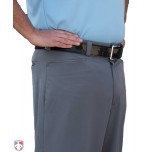
I can attest these are NOT Heather Grey (which UA does state they are not). However I don’t find them to be comparable to Heather Grey in the slightest, which UA does say.
I ordered them for softball, just received them, and am contemplating sending them back. I really want to try the poly-spandex, but according to UA, Heather Grey cannot be accomplished in this fabric.
I have a pair of golf pants that I picked up in Heather Grey that are very lightweight and I like the material, but I’d really like something designed for the actual job.
-
30 years later and that kid is still holding that ball down while touching first base?
The ball had to come up at some point. Did the kid lift it with that hand (possession)? Or did the kid continue to fumble for a grip on the ball before bringing it up (no possession)?
Like grayhawk said, touching the ground does not mean there is not possession (like the NFL). Nor does trapping it against the ground mean there is possession. You would need to see something more either way: grip, movement, etc.
-
OK, maybe it’s because I was reading that as a scenario with a continued “what if” .... ? Or maybe my reading comprehension is just in the crapper the last few days.
The runners would not be out on tag attempts, because the game is considered over at that point. The defense could appeal the runner missing third. If it is a successful appeal, I have a tie game with one out and runners on first and second.
-
Did I misread something again?
I thought I understood:
*R2 scored
*R1 reached 2B safely (base touched)
*BR reached 1B safely (base touched)
You have an opportunity to appeal (before the defense and/or umpires leave the field) , but what are you appealing?
-
1 hour ago, Guest Bill N said:
Thanks for your clarifications
Let me try a follow on.
Parts of this might be more Scorekeeper than Umpire.
First and 2nd, no outs.
Batter gets base hit, runner from 2nd scores winning run.
Runner from first touches 2nd, batter/runner touches first.Game over.
-
49 minutes ago, Guest Regina Ray said:
I'm sorry about my confusing description of the play, let me try again as this was not an appeal play, nor the runner missing a base.
There was a runner on first with less than two out.
The batter hit the ball to the outfield and the fielder caught the fly ball.
On the play, the runner (who was originally on first) did not tag up (as they were attempting to steal), they not only ran to second base but kept running and were on their way to third. When they recognized that it was a fly ball and that they had not tagged up, they were doing what they were supposed to, running back to touch second base, on their way back to first base. However, prior to them reaching (re-tagging) second base on their way back to first, the outfielder had thrown the ball to the second baseman (who was touching second base, as if it were a force play). As the play continued, the runner made it back to first base (apparently safely). The question is, was the player out at second?
No. The runner is not out at second. Keep it simple stupid (me); no more explanation needed. Right noumpere?
My apologies Regina. Your post was pretty clear, it was my head that wasn’t.
-
5 hours ago, noumpere said:
How can this be any type of force out (or attempt at one) when the batter flies out? And, no where did the OP mention missing second base.
This question (can an appeal be made at other than the base-left-too-soon?) gets asked a few times a year -- even if the poster uses "fan" language instead of "umpire" language. No need to confuse it any further.
Lesson number one in the morning ... DRINK YOUR COFFEE first ... I’m guessing I still had the other question about the tag/force to end the game stuck in my head ... yeah, I don’t know ... shameful disclaimer added to the original post.

-
-
EDITED TO ADD: DISREGARD THIS WHOLE POST ... I’M GOING TO CLAIM I WAS IN A PRE-COFFEE HAZE ... but leaving as proof of my ability to misread and spew nonsense with the best of them.

I think she is asking if you could consider the play at second base a force out (not an appeal) since the runner missed second base.
Generally the runner is considered to have beaten a throw for a force out if the runner has passed the bag, regardless of whether the runner touched the bag or not. At that point, the defense could appeal the missed bag for the out (not a force out).
So in the scenario presented, no ... once the runner rounded second and headed to third the force out is removed. The defense now has two options for the out though ... an appeal for failing to retag and leaving first early OR, an appeal for missing second base.
Having said that, an umpire could (should?) consider a throw to second base and touching of the bag an appeal for missing the base instead of an attempt on the force.
I’ll have to do some research for citations on this. I think most of it comes down to umpiring mechanics rather than rule interpretations though.
-
I’m going with the run not scoring in both of your scenarios ... we’re headed to extra innings ...
NFHS (2018)
Rule 9 Scoring—Record Keeping
SECTION 1 HOW A TEAM SCORES
ART. 1 . . . A runner scores one run each time he legally advances to and touches first, second, third and then home plate before there are three outs to end the inning.
EXCEPTION: A run is not scored if the runner advances to home plate during action in which the third out is made as follows:
a. by the batter-runner before he touches first base; or
b. by another runner being forced out; or
The rule states “during action in which the third out is made”. There is no reference to when or how the second out is made. Now, had they gotten the force at 1B (for the second out) and then made the play at 2B to tag the runner (for the third out), you would have a time play.
-
Dumb question — I’m not familiar with NCAA rules.
Has there never been a “clock” on pitchers (and hitters) before? Or was it there and just not enforced/emphasized?
-
Wow ... that is really over-complicating things unnecessarily.
My only point was staying on the base did not protect him, so there is no expectation for him to stay put. Not rehashing the “runner hit by the ball” scenarios.
With the ball still in play, R1 steps “behind” first base (outfield edge of the base) to talk to the base coach before taking his lead. One of his feet and most of his body are in foul territory (“past” first base). Without touching first base he takes his lead. Are you going to make him retouch?
I am utterly amazed how many folks are “going looking” for something to call here. You are being overly literal with your reading/scrutinization of this rule, but are happy adding made up components to a pick off move.

-
1
-
-
On 9/6/2019 at 7:23 PM, Jimurray said:
Aside from whether the appeal is valid are you saying an infielder has to have a play in baseball for the runner to be called out. Or is that a softball rule?
I was referring to the runner being hit by a batted ball in general — sorry for the confusion. Same in baseball and softball, though you obviously have some different definitions of when it no longer applies dependent on the code in both.
If he had stayed on the bag and let the line drive hit him, he puts himself in jeopardy of being called out. So you can’t expect him to stay there.
Calling "time!" all the time!
in Youth Recreation Ball
Posted
OK, now I’m wondering if we should move this conversation over there ...
After reading it, I feel compelled to clarify:
I am not calling time in the middle of an at bat to clean the plate. I’ve seen guys do this, drives me batty.
I clean the plate when there is a “natural pause” and it needs it, when it must be done (i.e., slide at the plate), or the batter or catcher gets hit with a good shot. Even with any “natural pause in the game”, I’m calling time if we were in play (obviously not between innings or hit by pitch).
Oh ... I can think of one more time I will do it unnecessarily ... after a play and my partner needs to get across the field to get into/back into position. This was something I was taught as a courtesy to my partner. That way it doesn’t seem as if the game is being held up because of us slow, fat, and old guys. It helps dispel the impression that we are slow, fat, old guys who might not make it into position for a call. Call it “professional cover”.